

This may seem obvious, but I think we should all be careful to avoid picking a means of communicating just because it’s currently popular and fashionable. Our communications needs are all different, and not just different to each other but different from one moment to the next.
So just as it is important to periodically review the potential promotional channels that could help you, it is equally important to periodically assess what you need to communicate and why.
As I have already mentioned, I am not and have never been a researcher, but I will try to highlight some common problems that I see researchers grappling with.
First, however, I want to recap some points I’ve made about what makes research communications unique.

The nature of Research Communications
The best way to promote research is the standard academic channels
As I have mentioned, the standard academic channels of publishing and conferences might not be enough in this era of researcher precarity, but any additional promotion you choose to do will be easier if you use these standard channels as well as you can. In some cases, they might even be enough! In the cases where standard channels are not enough, they are at least a solid foundation.
The most powerful marketing tool is the research itself
Important, robust research is likely to have a momentum of its own, and travel by word of mouth – even if sometimes obstacles to that momentum need to be removed. To look at it from the other direction, it is very difficult to build an audience around research that is not high quality.
The point I am really trying to make with both these points is this:
No research promotion should ever get in the way of actually doing the research.
There are a ton of marketing tools out there that will make this a tempting rule to break.
Don’t be afraid to stick to text
Websites, blogs and email newsletters comprised mainly of text are still popular, and arguably making a comeback – particularly for those in the knowledge economy. Academic research is still a profession that deals primarily with text, because research is difficult and time-consuming, and it’s not efficient to use, say, video as a primary tool.
Common Problems
There are two major problems that I find myself advising researchers on.

How much bandwidth do you have?
A big motivating factor for me to make this guide has been seeing endless marketing advice on how to use the available tools, with no consideration given to how much time they take.
The first question I always ask researchers I am advising is “How much bandwidth do you have?” How much time and energy do you think you can afford to spend on additional research promotion?
The answer might be none at all, in which case that is vital to recognise. If so, I hope this guide has given you the confidence to not devote your time to it, and has maybe given you an idea of what you might do if your bandwidth improves.
If you have the resources to hire a marketing team, and you think that would be a good return on investment, then many of the promotional channels I’ve been a bit dismissive about (e.g. TikTok) might make more sense.
I think most researchers will have, at best, the time to focus on one promotional project (e.g. LinkedIn or a newsletter) which occasionally allows them to dabble into other smaller projects (e.g. making a video).
However, only you will be able to answer this question – and, again, the answer is likely to keep changing.

What do you even talk about?
This is as big a problem as bandwidth, and up to this point I haven’t really touched on it.
Let’s say you have picked a promotional channel that works for you. Let’s say you are able to set aside a bit of time each week to write and publish content.
What do you write about?
Do you just write about your research? Rigorous academic research takes a very long time to produce, and it will be very rare that you have something new to say.
Do you instead write about the lifestyle of being a researcher, interweaving information on your research wherever possible? You could do, although you would then be a lifestyle influencer, and there’s no guarantee that audience would be interested in the specifics of your research.
Do you write about your cat? Everyone loves cats.
There is a conundrum to solve here. You need to be talking to an audience that is interested in your research, but you need to be giving them more than just your research. And of course you need to take time away from doing your research to assemble and present this information.
I think this challenge might be why many researchers abandon the project of serious research promotion.
I have thought a lot about this, and I think I have an answer.
You don’t just write about your research: you write about your whole field of research.
What value are you providing your audience? Your insight and understanding into this field. You have the context, and you know who the important players are. You can explain to an informed journalist or civil servant that the much-cited academic paper doing the rounds in the media is in the process of being retracted, and even its authors do not stand by it anymore.
You write about the research that you are doing, that you have done and that you hope to do. But you also write about the research of your peers, and even your rivals. A researcher who is comfortable giving credit to a professional rival for their good work is likely to win a lot of trust from their audience.
More than this, however, I think researchers should write about whatever it was that gave them the enthusiasm to pick this field of research in the first place. If you have to be taking time away from doing your research to do promotion, you might as well spend that time focusing on the aspects of research that you find truly inspiring.
This makes what you have to write more engaging, and it makes the process more enjoyable, so hopefully it’s easier to commit to over time. But I think it’s also just good for the soul. Research can be exhausting and frustrating, and it requires a lot of tunnel vision, and it’s easy to lose confidence in whether you’re actually making any progress. To make a habit of stepping back and reminding yourself why you picked this field can be a good way to centre yourself, and to stay focused when it comes time to put down the promotion and go back to the research.
My recommendations
Here are a few more points that I think might be worth considering.

Aesthetics are (generally) not important
I believe it is important to look professional – e.g. in your website design, your video, your profile photograph – but only up to a point. Beyond that it offers diminishing returns. When academic communications start to look too beautiful and expensive, they can start to feel commercial, like an advert.
Sometimes that is appropriate. An executive education course provided by the Saïd Business School might need promotional material that looks expensive, as a way to justify the high price of the course. However, these tend to be exceptions.
What makes something look ‘professional’, and particularly ‘aesthetically pleasing’, is highly subjective, and there are always improvements you can make. However, if your time is precious, you need to be intentional about what you do and don’t commit to. If you start down the road of optimising how pretty your communications look then you may find this is a road that goes on forever, and you may spend a great deal of time on something I would argue is of very little professional benefit.
Personal style is good
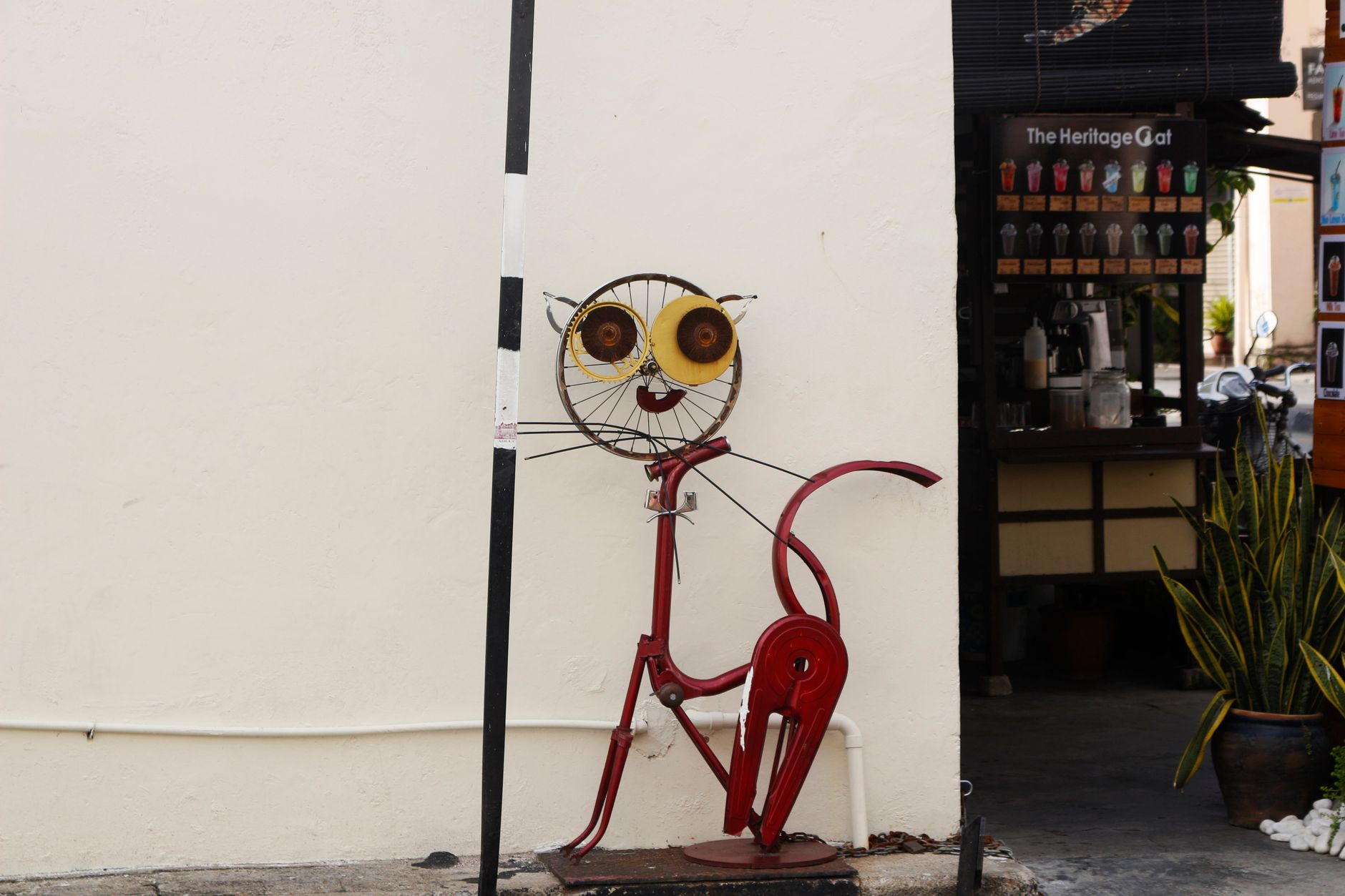
I will actually go further than suggesting aesthetics are not good use of time. If you want to stand out in a competitive space, one effective way to do this is to break the rules a little.
To be clear: for any researcher writing on behalf of their department to an external audience, you really should follow the University style guide. This is important for a number of obvious reasons, and something I believe the University does very well.
However, for your own personal website, newsletter, LinkedIn or Bluesky account you can afford to be less formal and rigid. Letting your personal style, your mannerisms and idiosyncrasies, shine through is a good way to stand out and stay in people’s memories.
I tend to think communications between researchers can be split into two types:
Academic papers
In actual research documentation it is obviously appropriate to use extremely specific evidence-based language, laced with caveats, because because your work will (hopefully) be set upon by the proverbial pack of wolves that is peer review, and every word needs to be defensible.
Conversations in cafeterias
For all the other occasions when researchers talk to each other, my sense is that it is the same tone as a conversation in a cafeteria. Exchanging ideas in plain language becomes the priority, and there is much less pressure to defend every word.
This is the tone I would suggest taking on your own platforms.
In fact, this is the tone I have tried to take with these web pages: I don’t want this to feel like a PowerPoint presentation. I want it to feel like a conversation in a cafeteria. This is why I am happy to break rules of grammar and syntax at times in the hope of making what I write feel more conversational. This is also why I didn’t quickly dictate a lot of ideas and then feed them into an AI chatbot and get it to write all this for me. I do think there can be a place for that, but this is not that that place.
Final thoughts
I think that’s everything, although I’ve probably left out something obvious. The more I reread this, the more I find myself adding. But hopefully this at least covers the basics of what I have learned over the years.
If you see anything in here that you know is wrong, I would genuinely appreciate you dropping me an email and correcting me!
Other than that, good luck, and I hope this proves useful.